TomorrowX is an Australian-founded research and software company established in 2006, with R&D in Cyprus and team members drawn from Australia, Cyprus, Denmark, Germany, Greece, Ireland, the Netherlands, Sweden, the United Kingdom and the United States.
Our purpose and philosophy
The power of and.
TomorrowX binds technological capacity to human value. One is incomplete without the other.
TechnologyHow machines work.
AnthropologyHow humans work.
TechnoanthropologyHow machines work for humans.
The benefit is bound into the definition.
Technoanthropology is deliberately coupled. How something works and how it works for humans are not separate stages in the TomorrowX process. They are designed together.
That means every TomorrowX innovation and solution must carry a defensible benefit for the organisation, our communities and our environment. The benefit is not an afterthought, a separate impact programme or a promise added once the technology has been built.
Company film
TomorrowX: Data Mediation.Tomorrow, today.
A short introduction to the thinking, purpose and people behind TomorrowX.
Research and history
How the work evolved.
The work began with a practical question: can the behaviour around a running system be changed without forcing the system itself through another disruptive release?
2006
The in-path discovery
TomorrowX began as FMT, focusing on online fraud, risk and interaction control. A working fraud capability revealed something broader: data entering and leaving a legacy system could be observed and altered without changing the application underneath.
FraudRuntime controlNon-invasive change
2007–09
From point solution to architecture
Research and enterprise deployment tested whether the same foundation could support security, authentication, compliance, analytics and system augmentation. Gartner recognised the company as a Cool Vendor and IBM later became a partner and minority shareholder.
Research formalised running systems as components with an outside purpose, a visible boundary and an internal implementation. The purpose was practical: identify a safe design surface where new behaviour could be mediated without reopening or disrupting the system inside. The boundary contract included messages, services and events together with security, performance, resilience, volume, location and other non-functional requirements.
The engine expanded beyond a single web interaction model. Research focused on how protocol, message sequence, context and policy could be understood across different generations of enterprise technology. This became the foundation for defining and governing interactions across modern, legacy and operational protocols.
Protocol intelligenceHTTP and JSONLegacy and operational protocols
2013–15
A separate layer and a parallel operating model
Architecture and market research located a distinct operational layer in the interaction between systems. The aim was to make innovation possible across technology generations without forcing every requirement into an application release. That layer had to remain fully programmable, multi-protocol and governed by the same non-functional requirements and evidence expected of production systems.
Everything-as-a-ServiceParallel environmentsConnect, do not integrate
2015–20
Composable architecture and the Stellar blockchain
The work moved from programmable runtime control into a composable delivery model. Reusable capabilities, protocol definitions and non-functional controls could be assembled around an outcome, then registered in a catalogue for reuse.
Working with Jed McCaleb and the Stellar team, TomorrowX applied the composable model to blockchain by representing the full Stellar framework as reusable components. Those components were then assembled, governed and reused to create industrialised solutions rather than one-off implementations. The work demonstrated that composable architecture could be applied at the scale of a complete distributed-technology framework.
This marketplace thinking gave rise to the X Store: a way for a team, domain or enterprise to publish and exchange proven capability without centralising every deployment.
CompositionStellar blockchainReusable capabilitiesIndustrialised solutionsX Store
2020–24
The full operational lifecycle
Research increasingly treated deployment as the midpoint rather than the end. Requirements, policies and non-functional constraints needed to remain connected to deployment, probes, telemetry, management, repair and retirement. In parallel, the target-state work formalised how a standardised Data Mediation foundation could be deployed and owned by decentralised teams across an enterprise.
DeploymentProbes and telemetryRepair and assurance
2025–26
Data Mediation
The accumulated work was brought together under one name. Data Mediation describes a fully programmable capability in the data path that can support multiple outcome classes across AI, cyber security, interoperability and assurance. CAP, Programmable Data Agents, the Editor and Console provide the technology foundation.
AICyberInteroperabilityAssurance
The Forbes Australia feature provides a concise introduction to the backstory and the current AI opportunity. The research archive preserves the earlier architecture and market papers.
Enterprise history
Research tested in real operating environments.
Selected organisations whose environments, programmes or relationships form part of the TomorrowX and FMT history. The marks are presented as historical context, not as a statement of current endorsement.
Names and marks are the property of their respective owners. Detailed customer stories are published only where evidence and permissions allow.
People
Core team
TomorrowX brings together experience in enterprise architecture, data, product development, programme delivery, law, cyber security, defence and organisational change. The team works across disciplines and regions to develop, package and support Data Mediation capabilities for complex enterprise environments.
Sarah Linley
Head of Data & Programmes
Sarah leads TomorrowX’s data and programme work, bringing a background in mathematics, digital design and international programme delivery. She coordinates initiatives across the company’s customer, partner and research ecosystem and leads the Melbourne edition of the NASA International Space Apps Challenge.
Stuart leads product strategy and development for TomorrowX. He combines extensive experience in global financial risk with a rigorous approach to product design, translating complex enterprise requirements into capabilities that can be proven, deployed and operated at scale.
Naresh leads the development of TomorrowX offerings. His career includes senior technology, architecture, innovation and delivery roles across major global financial institutions, including Citi, Standard Chartered and RBS/NatWest. He brings extensive experience in regulated environments and in translating enterprise priorities into scalable technology outcomes.
Dimitrios leads TomorrowX’s ways of working, focusing on the operating practices that connect strategy, product development and delivery. His background spans economics, technology and creative practice, supporting a multidisciplinary approach to innovation and organisational change.
Chris advises TomorrowX on commercial structuring, legal negotiations and the requirements of global growth. He holds qualifications in law and molecular microbiology and has completed executive education in strategy and leadership at Harvard Business School.
Kostas founded TomorrowX in 2006 and leads its strategy, research and commercial development. A computational linguist with nearly three decades of experience in AI and enterprise technology, he has led the development and application of Data Mediation across complex financial-services, government and enterprise environments.
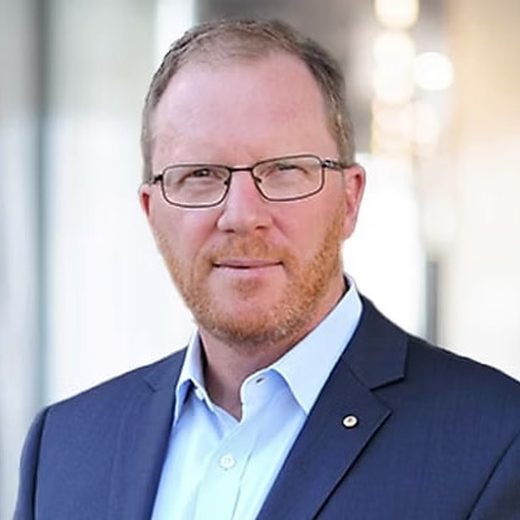
Retired Major General with 34 years in the Australian Army, culminating as the inaugural Head of Information Warfare for the Australian Defence Force. He led capabilities spanning cyber, electronic warfare, intelligence, space, artificial intelligence and command and control and now advises boards and technology organisations on national security, resilience and strategic risk.
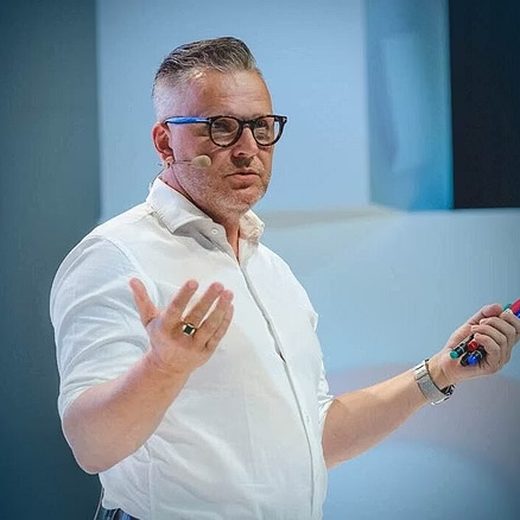
Arie is a world-leading authority on Agile, cultural and systems transformation and composable architectures. A co-author of the Agile Manifesto and a realist by nature, he focuses on adding value, avoiding delay and bringing structure, discipline and common sense to complex change.
Cybersecurity, intelligence and national-security executive with more than 25 years across government and industry. He established Accenture’s Intelligence and National Security practice in Australia, helped build its regional security business and has advised organisations across Asia Pacific and the Middle East on cyber, defence and strategic technology.
Customers have proved the technology in demanding environments. Partners help turn the platform into repeatable, sector-specific capability and bring it to customers through trusted delivery relationships.
Partnership programmes and enablement are managed from the Programmes section.